We think so, and we’re running the test to find out. We plan to acquire an established Australian business and measure what changes when profits flow to charity rather than investors.
Why Australia? Because eligible charity-owned businesses do not pay company tax, freeing up more cash for debt service.
Why charitable ownership? Because we think some customers, employees, suppliers and other stakeholders behave differently when profits flow to charity rather than private investors.

Acquire
Profitable businesses with durable earnings and long-term potential.

Preserve
Existing operations, management, jobs and enterprise value.

Redirect
Distributable profits toward high-impact charitable causes.

Measure
Test whether charitable ownership creates a commercial advantage.
Existing research suggests customers, employees and capital providers respond more favourably when profits benefit charity.
customers
+10 percentage points more likely to sell
Charity-linked eBay listings were more likely to sell than otherwise identical non-charity listings. Fair Trade-labelled coffee also sold more at price parity, although the effect reversed when buyers faced a meaningful price premium.
Ellenbein, Fisman & McManus, 2012; Hainmueller, Hiscox & Sequeira, 2015
employees
25% more applications
Mission-oriented job framing attracted more applicants. Other research suggests stronger mission alignment can also reduce employee turnover.
Hedblom, Hickman & List, 2019; Rode & Sahlir, 2023
lenders
Lower default risk and less restrictive terms
Foundation-controlled firms had lower estimated default probabilities, higher credit ratings, fewer covenants, less collateral and longer loan maturities than matched firms.
Buchanan & Kaya, 2024
We’re looking for lenders and capital partners willing to explore a new ownership model with us. We’re open to conventional and concessionary structures, including senior and subordinated debt, guarantees and blended finance.
Commercial discipline
The underlying business must be able to service its debt on ordinary commercial assumptions.
Thoughtful structuring
We expect the capital structure to reflect the realities of the acquisition, cash flows and ownership model.
Shared curiosity
We are looking for lenders interested in testing a new philanthropic model and learning from the first transaction.
The extra profit comes from stakeholder economics. When customers, employees, suppliers, and other stakeholders know that profits fund charity rather than private shareholders, they may prefer to support the business. The products, prices, management, and operating model remain the same. What changes are the inputs to the profit and loss statement: customer acquisition may become cheaper, hiring may become easier at competitive wages, staff turnover may fall, earned media may replace some paid marketing, and suppliers may offer better terms. The business operates in the same way, but under more favourable conditions.
In a low-margin business, modest changes can have a large effect on profit. Take a business with $10 million in net revenue and a 5% net margin, producing $500,000 in profit. If charitable ownership leads to a 5% increase in net revenue and a 3% reduction in operating costs, net revenue rises to $10.5 million, operating costs fall from $9.5 million to about $9.215 million, and profit rises to about $1.29 million. That is a 158% increase in profit from relatively modest changes in revenue and costs.
These figures are not forecasts. They simply show how operating leverage works in a low-margin business. Project COA is being built to measure the actual changes under controlled, well-documented conditions.
The first test market also offers a separate, jurisdiction-specific source of distributable cash through the Australian tax treatment described in the section below, ‘Why Australia?’ This makes the initial test less exposed to downside, but it is separate from the COA thesis. The thesis concerns stakeholder preference. The tax treatment provides some protection should there prove to be little or no stakeholder benefit.
The test is therefore focused on the stakeholder mechanism. If it works at anything close to the scale suggested by existing evidence on stakeholder preferences, it could change how philanthropic capital is deployed.
Not necessarily. Modern businesses routinely separate ownership from day-to-day management.
Public companies are the clearest example. They may be owned by millions of shareholders who take no part in operations. Professional managers run the business, while shareholders retain the right to profits. Ownership and operations are separate.
Equity compensation helps align management with business performance. A chief executive can hold a relatively small stake and still have a strong financial incentive to increase the company’s value. For example, 1% of a $10 billion company is worth $100 million. The remaining 99% can stay with shareholders who have no operational role.
Charitable ownership does not remove these incentives. A Profit for Good business can still offer management equity, performance bonuses, or employee profit-sharing. It can also divide profits between charity and employees. A structure that allocates 50% of profits to charity and 50% to employees is compatible with the model.
The same separation exists in private equity, family office acquisitions, employee ownership plans, search funds, and holding companies. Capital providers own most of the economic interest, while managers run the business and receive compensation linked to performance. Replacing a private investor with a charitable trust does not, by itself, change how the business operates.
There is one distinctive restriction. Any share of the business permanently committed to charity cannot also be granted to employees or sold to outside investors. This limits how much equity remains available for employee ownership or future fundraising. Within that limit, the business can still use standard management incentives, bonuses, and profit-sharing arrangements. Project COA’s financing structures are designed around this constraint.
It’s a different mechanism. The COA concerns ownership, whereas other methods of distributing profits to charity involve operational choices.
Bringing a business under charitable ownership changes who receives the residual profits, not how the business operates. The products, prices, supply chain, management, and commercial strategy can remain the same. The business competes on the same fundamentals as any other company, while potentially gaining an additional advantage from stakeholder preference.
B Corps, social enterprises, and ethical businesses usually create impact through operational choices. They may use more sustainable materials, pay higher wages, offer better benefits, donate part of their revenue, or invest in local communities. These choices can create substantial social value, but they may also involve higher costs, lower margins, slower growth, or higher prices.
Charitable ownership is separate from these operational choices. A B Corp or social enterprise could also be a charitably owned business. The models can be combined.
The Charitable Ownership Advantage thesis concerns a distinct and largely untested mechanism: whether changing who receives the profits can improve business performance without requiring operational changes.
We are building momentum behind the idea that Profit for Good businesses could outperform private companies whilst directing profits to charity.

Can Boring Businesses Become Permanent Impact Infrastructure?
Nikita Gossain on how Australia’s succession wave could turn ownership into a funding model.

The Deal-Making Show
Project COA on charitable ownership, acquisitions and the commercial case behind the model.
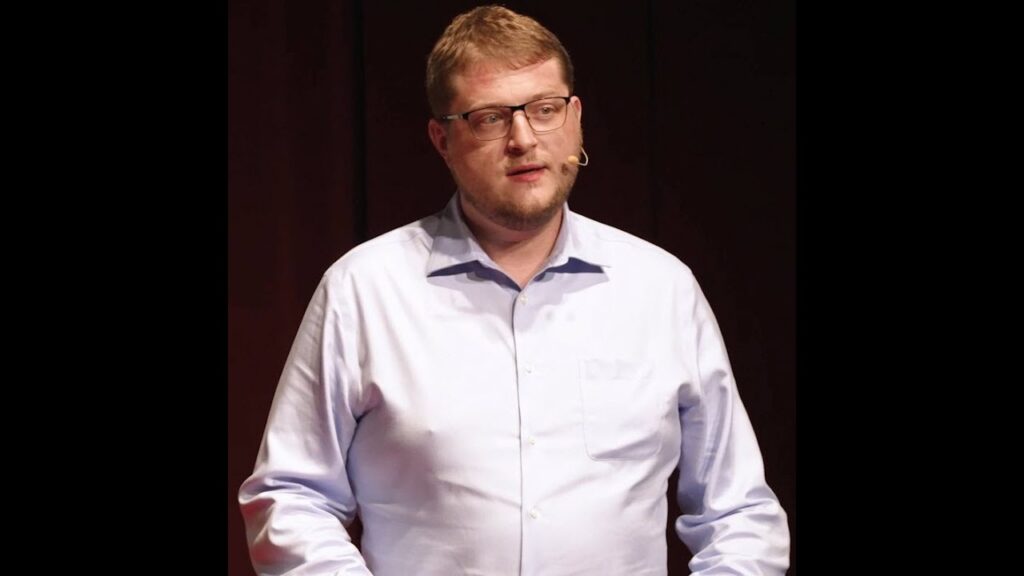
How to amplify the world’s donation dollars with Profit for Good
Brad West on using business ownership to redirect profits toward charity.
We think so, and we’re running the test to find out. We plan to acquire an established Australian business and measure what changes when profits flow to charity rather than investors.
Why Australia? Because eligible charity-owned businesses do not pay company tax, freeing up more cash for debt service.
Why charitable ownership? Because we think some customers, employees, suppliers and other stakeholders behave differently when profits flow to charity rather than private investors.
Acquire
Profitable businesses with durable earnings and long-term potential.
Preserve
Existing operations, management, jobs and enterprise value.
Redirect
Distributable profits toward high-impact charitable causes.
Measure
Test whether charitable ownership creates a commercial advantage.
Existing research suggests customers, employees and capital providers respond more favourably when profits benefit charity.
customers
+10 percentage points more likely to sell
Charity-linked eBay listings were more likely to sell than otherwise identical non-charity listings. Fair Trade-labelled coffee also sold more at price parity, although the effect reversed when buyers faced a meaningful price premium.
Ellenbein, Fisman & McManus, 2012; Hainmueller, Hiscox & Sequeira, 2015
employees
25% more applications
Mission-oriented job framing attracted more applicants. Other research suggests stronger mission alignment can also reduce employee turnover.
Hedblom, Hickman & List, 2019; Rode & Sahlir, 2023
lenders
Lower default risk and less restrictive terms
Foundation-controlled firms had lower estimated default probabilities, higher credit ratings, fewer covenants, less collateral and longer loan maturities than matched firms.
Buchanan & Kaya, 2024
We’re looking for lenders and capital partners willing to explore a new ownership model with us. We’re open to conventional and concessionary structures, including senior and subordinated debt, guarantees and blended finance.
Commercial discipline
The underlying business must be able to service its debt on ordinary commercial assumptions.
Thoughtful structuring
We expect the capital structure to reflect the realities of the acquisition, cash flows and ownership model.
Shared curiosity
We are looking for lenders interested in testing a new philanthropic model and learning from the first transaction.
The extra profit comes from stakeholder economics. When customers, employees, suppliers, and other stakeholders know that profits fund charity rather than private shareholders, they may prefer to support the business. The products, prices, management, and operating model remain the same. What changes are the inputs to the profit and loss statement: customer acquisition may become cheaper, hiring may become easier at competitive wages, staff turnover may fall, earned media may replace some paid marketing, and suppliers may offer better terms. The business operates in the same way, but under more favourable conditions.
In a low-margin business, modest changes can have a large effect on profit. Take a business with $10 million in net revenue and a 5% net margin, producing $500,000 in profit. If charitable ownership leads to a 5% increase in net revenue and a 3% reduction in operating costs, net revenue rises to $10.5 million, operating costs fall from $9.5 million to about $9.215 million, and profit rises to about $1.29 million. That is a 158% increase in profit from relatively modest changes in revenue and costs.
These figures are not forecasts. They simply show how operating leverage works in a low-margin business. Project COA is being built to measure the actual changes under controlled, well-documented conditions.
The first test market also offers a separate, jurisdiction-specific source of distributable cash through the Australian tax treatment described in the section below, ‘Why Australia?’ This makes the initial test less exposed to downside, but it is separate from the COA thesis. The thesis concerns stakeholder preference. The tax treatment provides some protection should there prove to be little or no stakeholder benefit.
The test is therefore focused on the stakeholder mechanism. If it works at anything close to the scale suggested by existing evidence on stakeholder preferences, it could change how philanthropic capital is deployed.
Not necessarily. Modern businesses routinely separate ownership from day-to-day management.
Public companies are the clearest example. They may be owned by millions of shareholders who take no part in operations. Professional managers run the business, while shareholders retain the right to profits. Ownership and operations are separate.
Equity compensation helps align management with business performance. A chief executive can hold a relatively small stake and still have a strong financial incentive to increase the company’s value. For example, 1% of a $10 billion company is worth $100 million. The remaining 99% can stay with shareholders who have no operational role.
Charitable ownership does not remove these incentives. A Profit for Good business can still offer management equity, performance bonuses, or employee profit-sharing. It can also divide profits between charity and employees. A structure that allocates 50% of profits to charity and 50% to employees is compatible with the model.
The same separation exists in private equity, family office acquisitions, employee ownership plans, search funds, and holding companies. Capital providers own most of the economic interest, while managers run the business and receive compensation linked to performance. Replacing a private investor with a charitable trust does not, by itself, change how the business operates.
There is one distinctive restriction. Any share of the business permanently committed to charity cannot also be granted to employees or sold to outside investors. This limits how much equity remains available for employee ownership or future fundraising. Within that limit, the business can still use standard management incentives, bonuses, and profit-sharing arrangements. Project COA’s financing structures are designed around this constraint.
It’s a different mechanism. The COA concerns ownership, whereas other methods of distributing profits to charity involve operational choices.
Bringing a business under charitable ownership changes who receives the residual profits, not how the business operates. The products, prices, supply chain, management, and commercial strategy can remain the same. The business competes on the same fundamentals as any other company, while potentially gaining an additional advantage from stakeholder preference.
B Corps, social enterprises, and ethical businesses usually create impact through operational choices. They may use more sustainable materials, pay higher wages, offer better benefits, donate part of their revenue, or invest in local communities. These choices can create substantial social value, but they may also involve higher costs, lower margins, slower growth, or higher prices.
Charitable ownership is separate from these operational choices. A B Corp or social enterprise could also be a charitably owned business. The models can be combined.
The Charitable Ownership Advantage thesis concerns a distinct and largely untested mechanism: whether changing who receives the profits can improve business performance without requiring operational changes.
We are building momentum behind the idea that Profit for Good businesses could outperform private companies whilst directing profits to charity.
Can Boring Businesses Become Permanent Impact Infrastructure?
Nikita Gossain on how Australia’s succession wave could turn ownership into a funding model.
The Deal-Making Show
Project COA on charitable ownership, acquisitions and the commercial case behind the model.
How to amplify the world’s donation dollars with Profit for Good
Brad West on using business ownership to redirect profits toward charity.